
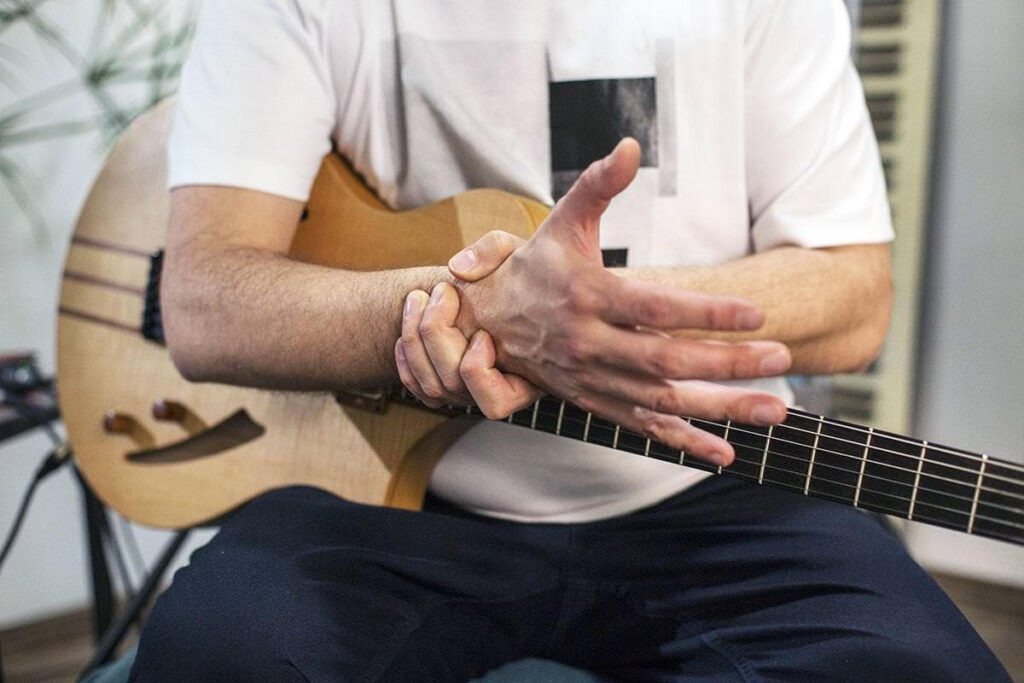
When we think of athletes, we usually picture runners, hockey players, or gym-goers. But there’s a whole group of high-performance performers who often get overlooked:
Musicians.
Whether you’re a violinist, pianist, guitarist, drummer, or singer, your body is your instrument too. And just like any athlete, when you use your body for repetitive, precise, and demanding movements, injuries can happen.
That’s why more and more health professionals now use the term:
“The Musical Athlete.”
Because that’s exactly what musicians are.
 Why Musicians Are So Prone to Injury
Musicians place unique stresses on their bodies:
- Repetitive movements for hours a day
- Sustained, often awkward postures
- High precision and fine motor control demands
- Long practice sessions without enough breaks
- Performance stress and muscle tension
Unlike many sports, there’s rarely cross-training or rest built into music practice. The same muscles and joints are used over and over again, sometimes for decades.
Over time, this can lead to overuse injuries, pain, and performance-limiting conditions.
 Common Injuries We See in Musicians
At Spine & Sports, we commonly treat musicians for:
- Neck and shoulder pain
- Upper back and postural strain
- Tendonitis (wrist, elbow, forearm, fingers)
- Rotator cuff and shoulder impingement
- TMJ (jaw pain and clenching)
- Headaches
- Nerve irritation or tingling into the arms
- Low back pain
- Focal muscle fatigue and overuse syndromes
Some of these come on suddenly, but many develop slowly and quietly—until one day playing just isn’t comfortable anymore.
 It’s Not “Just Sore Muscles”
One of the biggest problems musicians face is normalizing pain.
“It’s just part of playing.”
“Everyone in my section hurts.”
“I’ll just push through it.”
Sound familiar?
Pain is not a badge of honor. It’s information. And ignoring it often turns a small, fixable problem into a chronic, stubborn injury that can threaten your ability to play at all.
 The Performance–Pain Connection
Musicians don’t just use their bodies—they use their nervous systems at a very high level.
Pain can:
- Reduce fine motor control
- Change coordination and timing
- Increase muscle guarding and tension
- Create compensation patterns that cause new problems elsewhere
In other words, pain doesn’t just hurt—it affects performance.
 How Physiotherapy Helps the Musical Athlete
Physiotherapy for musicians is not just about “rubbing where it hurts.”
We look at:
 Your posture while playing
- Your instrument position
- How your joints and muscles share the workload
- Your practice volume and recovery
- Weak links, overload areas, and compensation patterns
Treatment may include:
- Manual therapy and soft tissue work
- Joint mobility and control work
- Targeted strengthening and endurance training
- Postural and ergonomic advice
- Load management (how much and how often you play)
- Nervous system calming and tension reduction
The goal is not just to get you out of pain, but to get you back to playing better and more comfortably.
 Prevention Is Part of Performance
Just like athletes, musicians benefit enormously from:
- Proper warm-ups
- Strength and endurance training
- Mobility work
- Smart practice scheduling
- Early treatment when symptoms first appear
Think of it as maintaining your body the same way you maintain your instrument.
 The Bottom Line
If you’re a musician:
You are not “just a player.”
You are a high-performance athlete of fine motor control, endurance, and precision.
And your body deserves the same level of care.
If pain, tension, or fatigue is starting to interfere with your playing—or your enjoyment of music—it’s worth addressing it early.
Your music (and your body) will thank you.