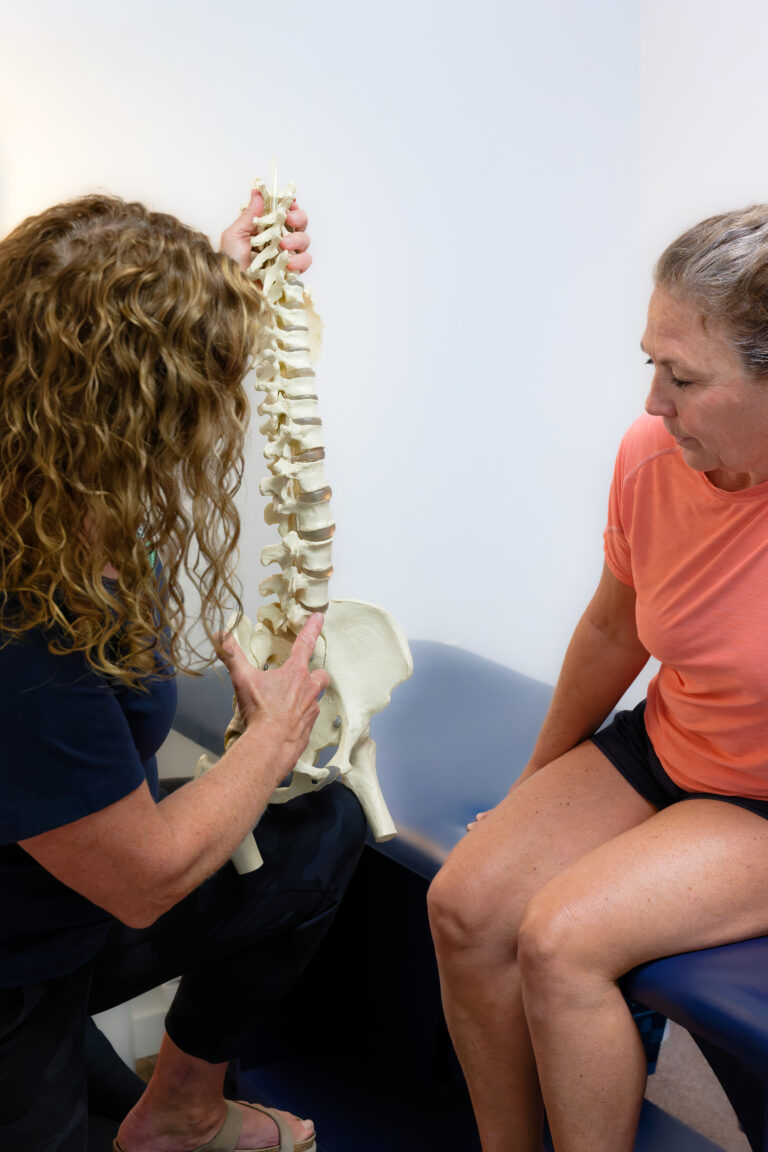

We’ve all experienced it: you stand up, stretch, or squat — and suddenly your knee, ankle, hip, or shoulder makes a click, crack, or pop. Should you be worried?
At Spine & Sports Physiotherapy, we often hear this question from patients. Let’s break down what those sounds really mean.
 Why Do Joints Make Noise?
- Gas Bubbles (Cavitation)
- Synovial fluid inside your joints contains oxygen, nitrogen, and carbon dioxide.
- When you move, pressure changes can cause bubbles to form and collapse, creating a popping sound.
- This is the same mechanism as “cracking” your knuckles — and it’s usually harmless.
2. Tendon or Ligament Movement
- Sometimes a tendon or ligament moves slightly over a bone, then snaps back into place.
- This can cause a clicking or snapping sound — common in the knee, hip, or shoulder.
3. Rough Joint Surfaces
- If cartilage has worn down a little (as with early arthritis or after an old injury), the smooth gliding surface isn’t perfect anymore.
- That roughness can create creaks or crackles, especially in knees.
 When Should You Worry?
Most of the time, noisy joints are normal and painless. But if you notice:
- Pain along with the noise
- Swelling or warmth in the joint
- Locking or catching (the joint gets stuck)
- Instability (feeling like it might “give way”)
…then it’s worth booking a physiotherapy assessment. These signs can suggest something more than normal joint sounds.
 How Physio Can Help
- Assessment: We determine whether your joint noise is normal or linked to injury/arthritis.
- Strengthening: Exercises for muscles around the joint (like quads for knees, rotator cuff for shoulders) often reduce clicking.
- Mobility & Manual Therapy: Gentle techniques to restore smooth movement.
- Education: Knowing what’s safe — and what’s not — brings peace of mind.
 Bottom Line
- Joint noises are common and usually harmless.
- Focus less on the sound itself, and more on whether there’s pain, swelling, or dysfunction.
- If in doubt, a physiotherapist can help assess and guide you.