Have you ever felt like you’re walking with a small pebble stuck in your shoe—only to discover there’s nothing there?
Or perhaps you’ve noticed burning pain, tingling, or numbness between your toes that seems to worsen the longer you’re on your feet.
If this sounds familiar, you may be dealing with Morton’s neuroma, one of the most common causes of forefoot pain.
What Is Morton’s Neuroma?
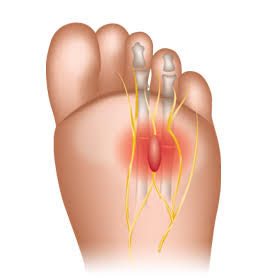
Despite its name, a Morton’s neuroma isn’t actually a tumour. Instead, it’s a thickening and irritation of the tissue surrounding one of the small nerves that runs between the bones of your foot.
It most commonly develops between the third and fourth toes, where the nerve can become compressed and inflamed over time.
Think of it like repeatedly pinching a garden hose. Eventually, the hose becomes irritated where it’s being squeezed. The same thing can happen to the nerve in your foot.
Common Symptoms
People often describe Morton’s neuroma as:
- Feeling like they’re walking on a marble or folded sock
- Burning pain in the ball of the foot
- Tingling or numbness in the toes
- Sharp, electric-like pain when walking
- Relief after removing shoes and massaging the foot
Many people notice symptoms worsen after long walks, running, hiking, golfing, or wearing narrow shoes.
Who Gets It?
Morton’s neuroma is especially common in:
- Runners
- Hikers
- People who spend long hours standing
- Individuals who wear narrow or high-heeled shoes
- Those with bunions or certain foot mechanics that increase pressure on the forefoot
Women are diagnosed more frequently than men, likely because of footwear choices, although anyone can develop it.
How Can Physiotherapy Help?
The good news is that many people improve without surgery.
At Spine & Sports Physiotherapy, treatment focuses on reducing pressure on the irritated nerve while addressing the underlying cause.
A physiotherapist may help by:
Assessing your walking mechanics to identify why the nerve is becoming compressed.
Mobilizing the joints of the foot to improve movement and reduce stress through the forefoot.
Releasing tight muscles in the calf, foot, and lower leg that may be altering how forces travel through your foot.
Teaching strengthening exercises for the small muscles of the foot and ankle to improve support and stability.
Providing footwear advice so your shoes work with your feet instead of against them.
Recommending padding or orthotics when appropriate to reduce pressure on the painful area.
For some patients, taping techniques or activity modifications during the healing phase can also make a significant difference.
Don’t Ignore Foot Pain
One mistake we often see is people trying to “walk through it.” Unfortunately, continuing to irritate the nerve can make symptoms more persistent and recovery more challenging.
The earlier treatment begins, the easier it is to calm the irritated tissue before it becomes chronically inflamed.
The Bottom Line
Your feet carry you thousands of steps every day. They deserve the same attention as your knees, hips, and back.
If you’re experiencing burning pain, numbness, or the sensation of walking on a pebble, don’t assume it’s just part of getting older. A thorough assessment can identify whether Morton’s neuroma—or another foot condition—is the cause.
With the right treatment plan, many people return to walking, hiking, running, and enjoying everyday activities comfortably again.
Sometimes, the smallest nerve can create the biggest interruption to your day—but with the right care, it doesn’t have to keep you off your feet.