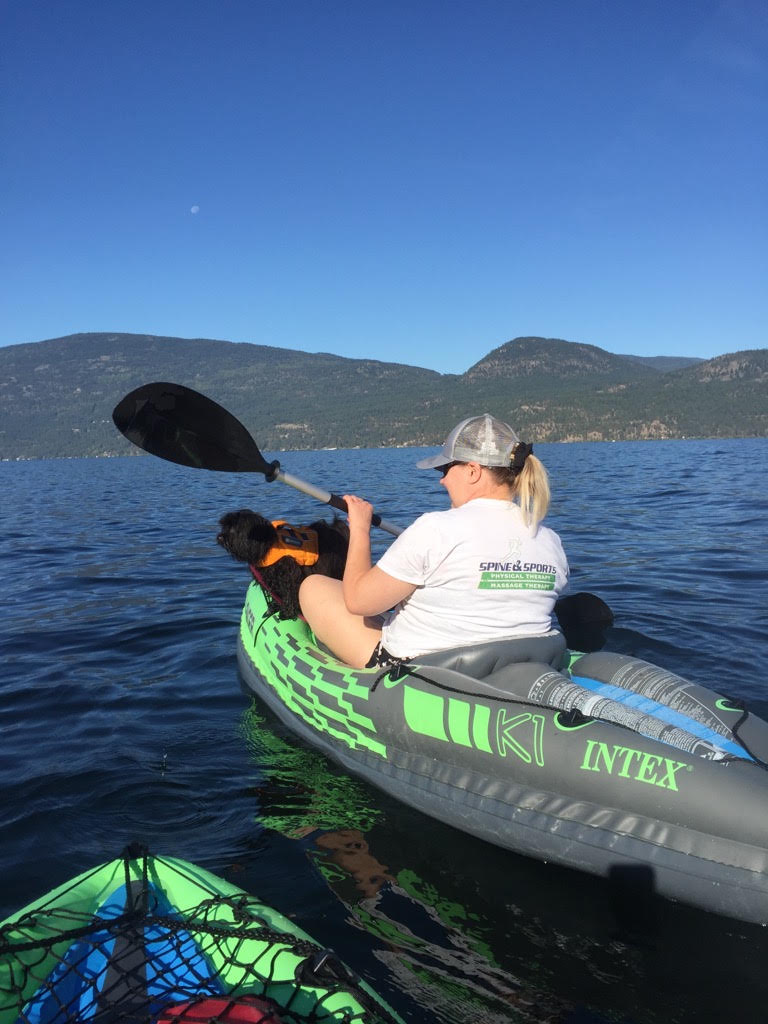
Living in the Okanagan, we’re lucky to have countless lakes that are perfect for kayaking. It’s one of the best ways to enjoy the outdoors, stay active, and soak up our beautiful summers.
But here’s something that might surprise you…
As physiotherapists, many of the kayaking injuries we see don’t actually happen while people are paddling.
They happen before they ever get on the water.
The Real Injury Risks
 Lifting the Kayak onto the Vehicle
This is by far one of the biggest culprits.
A kayak can weigh anywhere from 30–70 pounds, and lifting it overhead onto roof racks often involves awkward twisting, reaching, and lifting.
This can lead to:
- Shoulder strains
- Rotator cuff irritation
- Neck pain
- Low back injuries
- Muscle spasms
Physio Tip: Whenever possible, lift with a partner or use a kayak loading assist. Lift with your legs, keep the kayak close to your body, and avoid twisting while carrying the weight.
 Getting In and Out of the Kayak
This is another surprisingly common time for injuries.
Stepping into a kayak on an unstable dock or uneven shoreline challenges your balance and flexibility.
It’s easy to slip or suddenly twist your knee, hip, or back.
People often experience:
- Knee strains
- Hip irritation
- Back “tweaks”
- Falls resulting in wrist or shoulder injuries
Take your time, use your paddle for extra balance if needed, and don’t rush the process.
Once You’re Paddling…
Here’s the good news.
Once you’re comfortably in the kayak, it becomes an excellent form of exercise.
Kayaking offers many health benefits, including:
 Low-impact cardiovascular exercise
Improved core strength
Better posture and trunk stability
Increased shoulder endurance
Gentle spinal rotation that helps maintain mobility
Stress reduction from spending time outdoors
It can be a wonderful activity for people of many ages because it’s easy on the hips, knees, and ankles while still providing a great workout.
Don’t Forget to Stretch
A few minutes of stretching before and after paddling can make a big difference.
Focus on:
- Shoulders
- Chest muscles
- Upper back
- Hip flexors
- Hamstrings
- Gentle trunk rotation
Your body will thank you the next day.
The Bottom Line
Kayaking is one of our favourite summer activities, and we encourage our patients to get out and enjoy our beautiful lakes.
Just remember—the greatest injury risk often isn’t the paddling itself.
It’s lifting the kayak onto your car and getting safely in and out.
Take your time, use good lifting technique, and enjoy every paddle.
Happy kayaking!
— The Team at Spine & Sports Physiotherapy