By Cheryl Witter, Physiotherapist Spine & Sports Physiotherapy
It’s one of the most common questions we hear in the clinic:
“Can you recommend a pillow?”
The truth is, there’s no single “best” pillow. The right pillow for your neighbour may be completely wrong for you.
Choosing a pillow is a bit like choosing a pair of running shoes—it needs to fit your body and your sleeping style.
What Is Your Pillow Actually Supposed to Do?
Your pillow has one important job:
Keep your neck in a comfortable, neutral position while you sleep.
Imagine your spine as a straight line. Your pillow should support your head so your neck isn’t bent too far forward, backward, or off to one side.
If your neck spends seven or eight hours in an awkward position every night, it’s no surprise you wake up stiff.
Side Sleeper? Back Sleeper?
Your sleeping position makes a big difference.
If you sleep on your side:
You generally need a thicker, firmer pillow to fill the space between your shoulder and your head.
Too thin? Your neck bends downward.
Too thick? Your neck bends upward.
Neither is ideal.
If you sleep on your back:
A medium-height pillow usually works best.
The goal is to support the natural curve of your neck without pushing your head too far forward.
Stomach sleepers?
Physiotherapists generally don’t love this position because it requires your neck to stay rotated for hours at a time.
If you’re a lifelong stomach sleeper, don’t panic—but gradually learning to sleep on your side may help reduce neck irritation.
Memory Foam or Feather?
People often ask if one material is better than another.
The answer is—not necessarily.
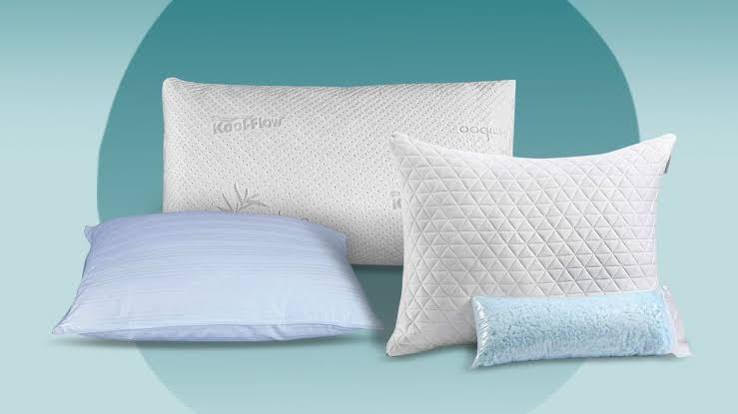
Memory foam provides consistent support and keeps its shape well.
Feather or down pillows feel softer and mould easily but often flatten during the night.
Latex pillows tend to be supportive, durable, and cooler than memory foam.
The best material is simply the one that keeps your neck comfortable throughout the night.
When Is It Time for a New Pillow?
Even a great pillow won’t last forever.
If your pillow is:
- Flattened
- Lumpy
- Losing its shape
- Constantly folded over to make it comfortable
…it may be time for a replacement.
Most pillows should be replaced every couple of years, depending on the material and how well they maintain their support.
Can the Wrong Pillow Cause Neck Pain?
Absolutely—but it isn’t always the only cause.
Poor posture during the day, hours spent looking at phones and computers, stress, arthritis, previous injuries, and muscle tension can all contribute to neck pain.
Sometimes changing your pillow helps dramatically.
Sometimes it’s only one piece of the puzzle.
How Can Physiotherapy Help?
If you’re waking with neck pain most mornings, a physiotherapist can help determine whether your pillow is actually the problem.
We assess:
- Your sleeping position
- Neck mobility
- Muscle tightness
- Posture
- Strength
- Daily habits that may be contributing to your symptoms
Often, a few simple exercises combined with better pillow support can make a significant difference.
The Bottom Line
The best pillow isn’t necessarily the most expensive one—it’s the one that keeps your neck comfortable and well supported throughout the night.
If you’re waking every morning with stiffness, headaches, or neck pain, don’t assume you just need another pillow.
Sometimes your neck is trying to tell you something else.
A proper assessment can help determine whether your pillow is the culprit—or whether your neck simply needs a little physiotherapy.