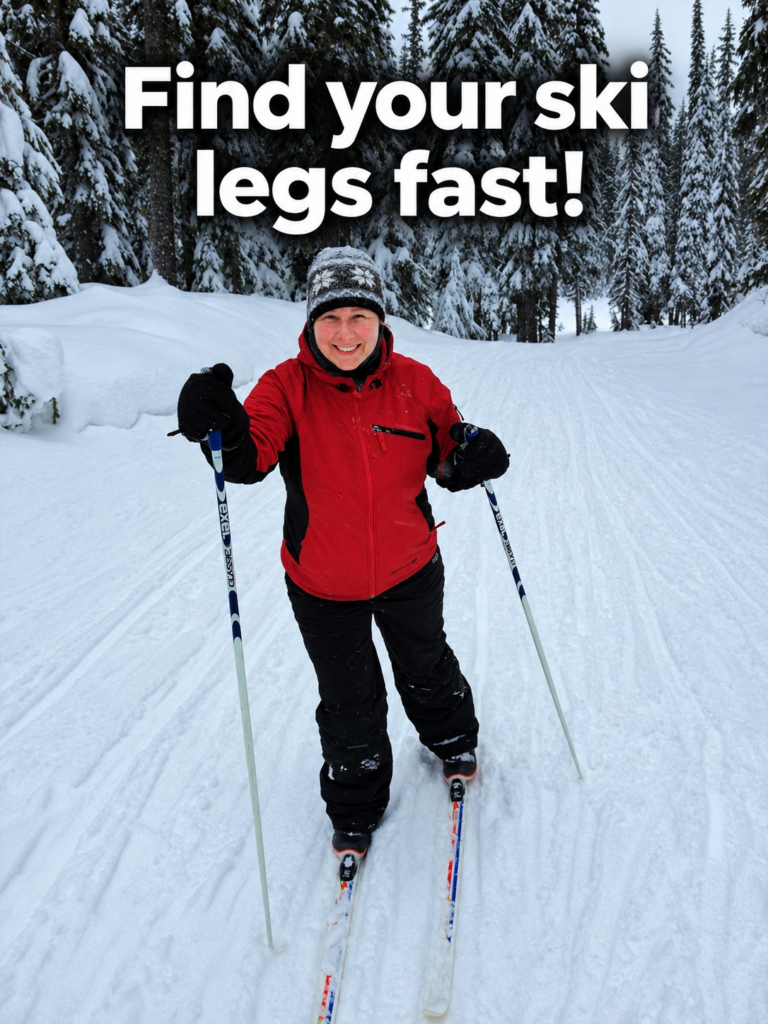
Build strength, sharpen your balance and enjoy more of your day on the mountain.
The snow is falling, your skis are ready—but are your legs?
Even if you walk, hike or stay active throughout the year, skiing can challenge your muscles in a different way. The sustained bent-knee position, repeated turns and changing snow conditions demand strength, endurance, balance and quick reactions.
The fastest way to prepare is to train those demands specifically. You won’t build ski fitness overnight, but consistent, focused exercise can help you head into the season feeling stronger and more confident.
Which muscles matter most?
Quadriceps: your downhill brakes
The muscles at the front of your thighs help support your skiing stance and control how deeply your knees bend. They also work as they lengthen—called eccentric control—to help absorb forces through turns and uneven terrain. Think squats, wall sits and slow, controlled step-downs.
Glutes: your hip control centre
Your buttock muscles help control your pelvis and thighs as you shift your weight from ski to ski. Strong glutes support steadier leg alignment and powerful turns. Bridges, lateral band walks and split squats are useful options.
Hamstrings: support behind the knee
Working with your quadriceps, your hamstrings help control the knee and hip. Bridges, hamstring curls and hip-hinge exercises help build this important partnership.
Core: a stable base for moving legs
Your abdominal and back muscles help control your trunk while your legs respond to the terrain. Exercises such as bird dogs, side planks and standing resistance-band presses train you to stay steady while other parts of your body move.
Calves and lower legs: fine-tuning your stance
Although ski boots limit ankle movement, your lower-leg muscles still contribute to pressure control and balance. Calf raises and controlled ankle movements deserve a place in your preparation.
Together, these muscle groups help meet the physical demands of skiing. Ski conditioning should also include cardiovascular exercise to build endurance for the day ahead.
Balance is more than standing on one leg
On the mountain, balance is constantly changing. You shift your weight, adjust your edges and respond to bumps, ice and softer snow.
Your brain combines information from your eyes, inner ear and sensors in your muscles and joints to work out where your body is. That body-position sense is called proprioception.
Standing on one leg is a starting point. Adding small reaches, gentle knee bends or controlled side-to-side weight shifts makes the task more dynamic. Practise near a stable support and prioritise control before adding difficulty.
Your reactions need practice, too
A patch of ice doesn’t give you time to plan your response. Your nervous system needs to recognise the change and coordinate a quick adjustment.
Reaction training adds an unexpected cue to a movement—for example, stepping left or right when a partner calls a direction, or catching a softly tossed ball while maintaining a steady stance.
Start on a firm, clear surface. Faster movements and small lateral hops can come later, when strength, balance and landing control are ready. Research in recreational skiers supports including balance and agility in preparation, although this does not mean any single drill will prevent an injury.
Why preparation matters
When your thighs are burning and your legs feel heavy, maintaining good technique becomes harder. Better conditioning helps you tolerate the work of skiing, while balance and reaction practice challenge your ability to adjust to changing demands.
That can mean more confident turns, fewer stops to rest tired legs and more enjoyment with family and friends.
Preparation is also one part of reducing injury risk. It cannot eliminate falls or prevent every ligament injury. Properly adjusted equipment, suitable terrain, good instruction and stopping when tired remain essential.
Get started with a focused plan
Aim for two or three strength sessions each week, allowing recovery between harder sessions. Add short balance practices and regular walking, cycling or other aerobic activity. Build gradually over several weeks rather than cramming a hard workout in before your first ski day.
On the mountain, warm up, start with easier runs and take breaks before fatigue takes over.
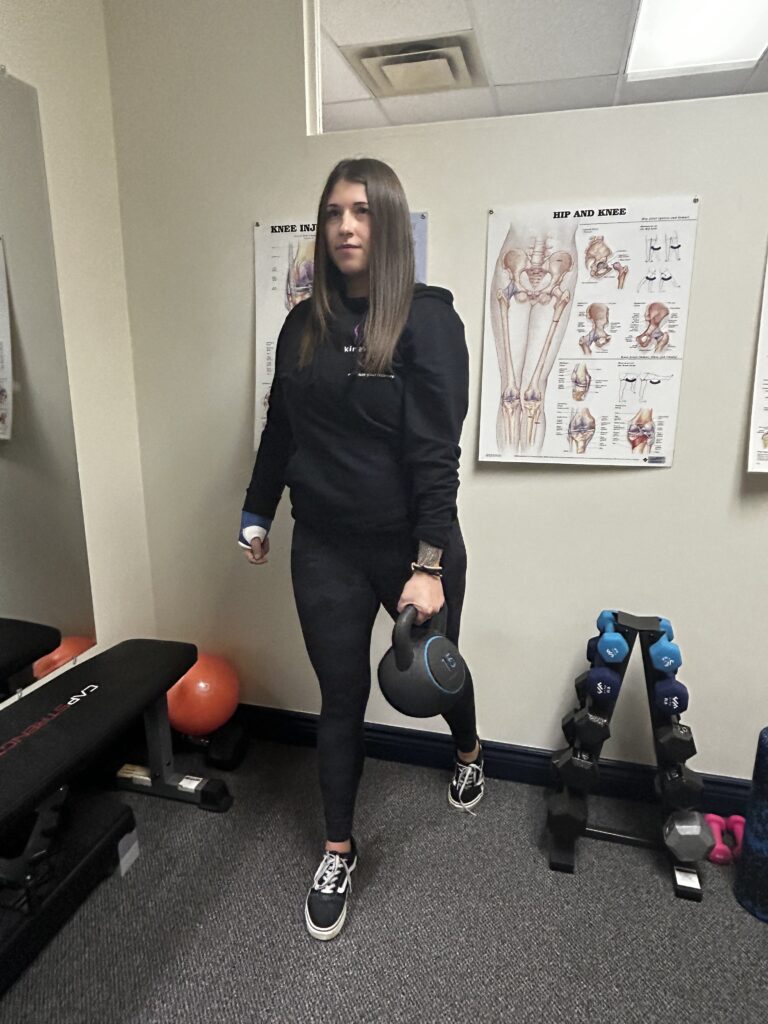
Not sure where to start? One session with our kinesiologist can help you learn five targeted exercises suited to your strength, balance and skiing goals. If pain or an old injury is holding you back, our physiotherapists can help assess what needs attention.
Get your ski legs ready—so you can spend more time enjoying the mountain.